

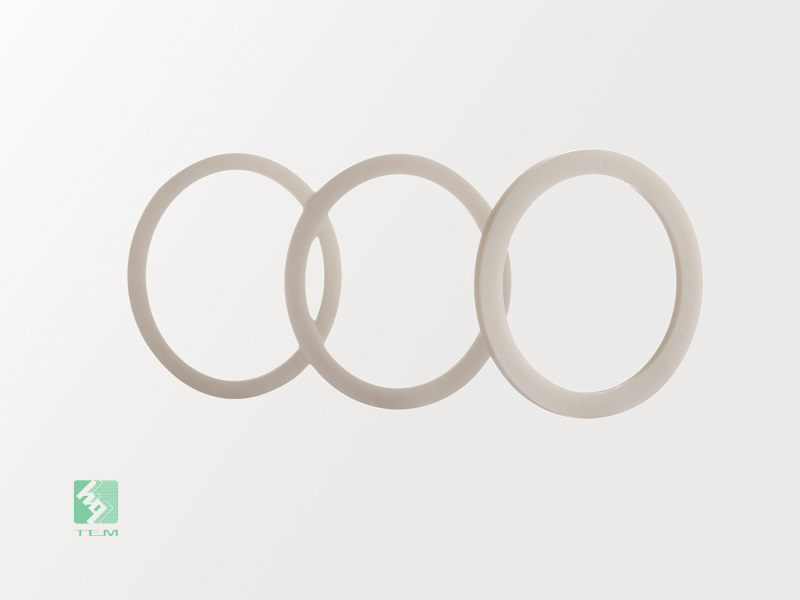
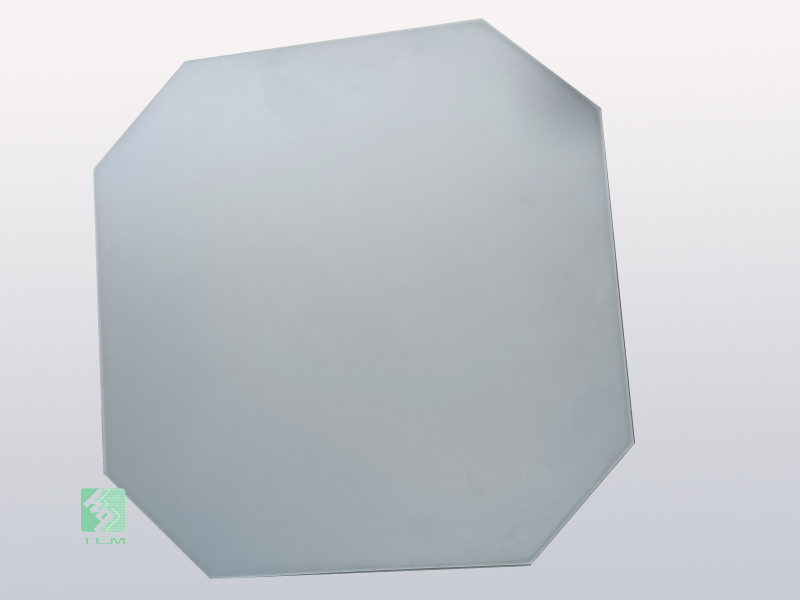
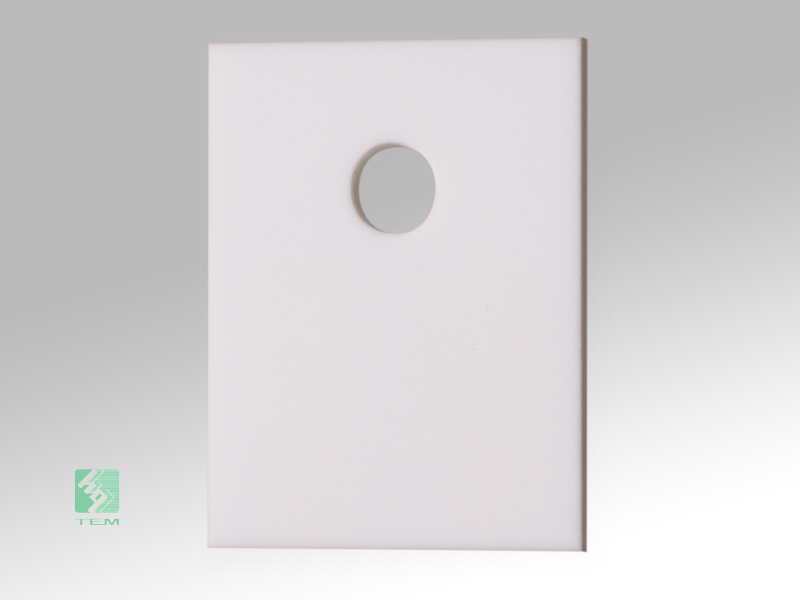
Why you need our services, you know you're getting highly qualified professionals who have the expertise and experience to make sure your project is done properly and functions.
Policy Storm: Precision Implementation of Rare Earth Export Controls
Since 2025, China's Ministry of Commerce has successively issued multiple export control announcements, imposing strict controls on seven categories of medium and heavy rare earths and related materials, including samarium (Sm), gadolinium (Gd), terbium (Tb), dysprosium (Dy), lutetium (Lu), scandium (Sc), and yttrium (Y). These controls cover metals, alloys, targets, oxides, and permanent magnet materials in various forms. In January 2026, China further tightened rare earth export restrictions against Japan, bringing approvals for yttrium oxide (Y₂O₃) and other heavy rare earths essential for high-end optical modules and semiconductor ceramic packaging to a near standstill.
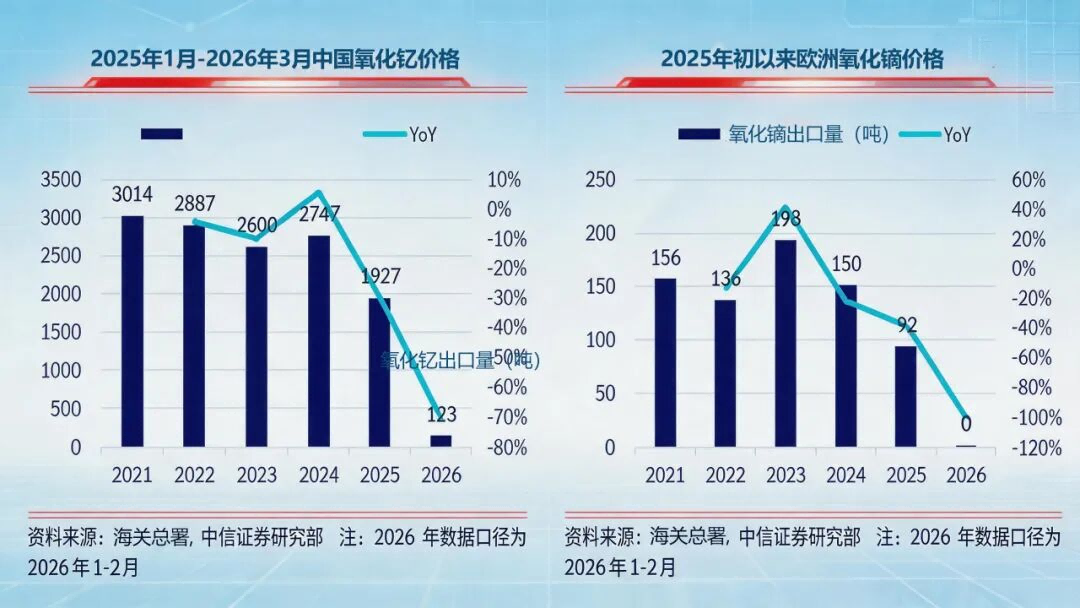
According to General Administration of Customs data, from January to February 2026, total exports of yttrium oxide, dysprosium oxide, terbium oxide, and praseodymium oxide plummeted by 93.8% year-on-year. China accounts for 70% of global rare earth production, and the reduction in exports has directly led to shortages and sharp price hikes for rare earth oxides overseas.
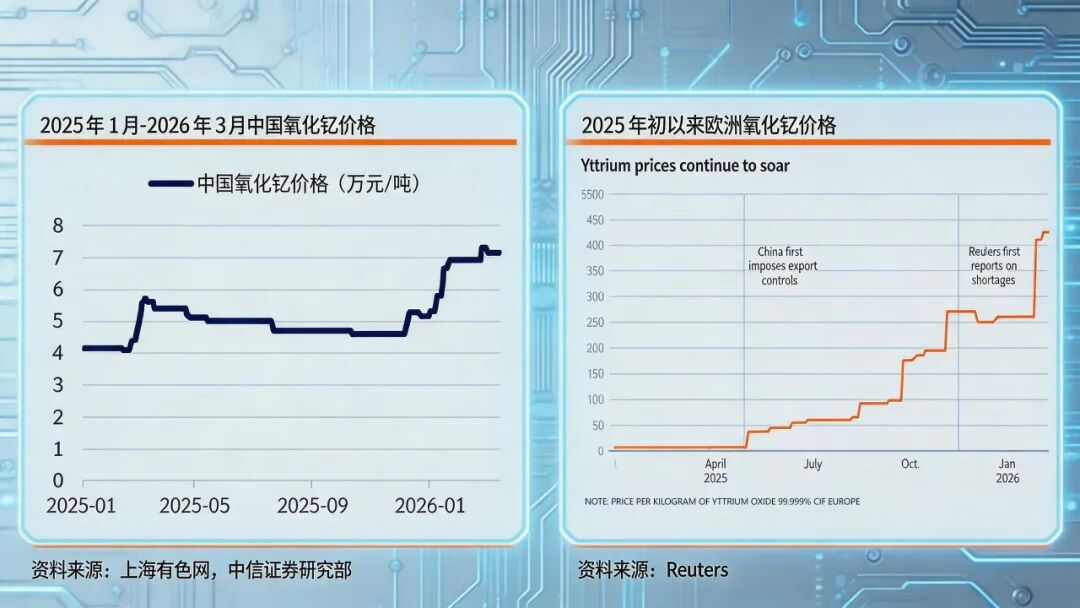
The price surge of yttrium oxide has been the most dramatic. Before the export controls, overseas prices stood at just $7.9/kg. After controls were imposed, prices soared to $372.5/kg—a staggering increase of 4,615%. Meanwhile, domestic prices in China rose by only 72%, creating a massive price disparity of more than 36 times.
Impact Transmission: From Rare Earth Shortage to Kyocera Production Cuts
The core challenge for aluminum nitride ceramics lies in their heavy reliance on yttrium oxide (Y₂O₃), dysprosium oxide (Dy₂O₃), terbium oxide (Tb₄O₇), and other rare earth sintering aids—with heavy rare earths (dysprosium, terbium) being essential raw materials—for sintering and performance enhancement.
Japanese giants, which hold nearly 70% of the global HTCC ceramic packages and substrates market, rely on China for 93% of their rare earth raw materials for high-end ceramic packaging. Following the tightened export controls at the end of February 2026, approvals have effectively halted. Their in-house raw material inventories are sufficient for only 10 to 15 days, and Japanese government reserves can sustain operations only until the end of April.
From March 2026 onward, Japanese manufacturers have reduced high-end optical module ceramic packaging production capacity by 25% to 30%. If export approval breakthroughs do not materialize, high-end production lines face the risk of forced shutdown by late May to early June, with comprehensive production restrictions highly likely from June onward.
A CITIC Securities research report explicitly notes that while Japanese and American manufacturers dominate the high-end ceramics sector, against the backdrop of restricted rare earth access, Chinese manufacturers stand to accelerate their overseas expansion and capture market share, ushering in a historic window of opportunity.
AlN Ceramics: Why Are They Indispensable to Rare Earths?
Aluminum nitride (AlN) is a covalent compound with a low self-diffusion coefficient, making sintering densification extremely challenging. In advanced ceramics production, rare earth oxides serve as additives to improve sinterability, densification, microstructure, and crystalline phase composition, thereby substantially enhancing mechanical, electrical, optical, and thermal properties.
Without a stable and reliable supply of heavy rare earths, large-scale industrial production of high-end aluminum nitride ceramic substrates would be impossible.
From a market structure perspective, CITIC Securities data indicates that the global HTCC ceramic packages & substrates/metallized ceramic substrates market reached $2.87 billion/$1.78 billion in 2025. Japanese manufacturers hold nearly 70% of the global HTCC ceramic package and substrate market, while upstream ceramic white sheets in the metallized ceramic substrate segment are also dominated by Japanese companies.
This highly concentrated landscape is being upended by rare earth controls. Japanese companies face not just short-term production cuts but a structural dilemma: importing rare earths from other countries would increase manufacturing costs by approximately 40%; abandoning the 1.6T and subsequent high-end markets means ceding the most promising growth segment to competitors.
Powder Breakthrough: The "First Kilometer" of Import Substitution
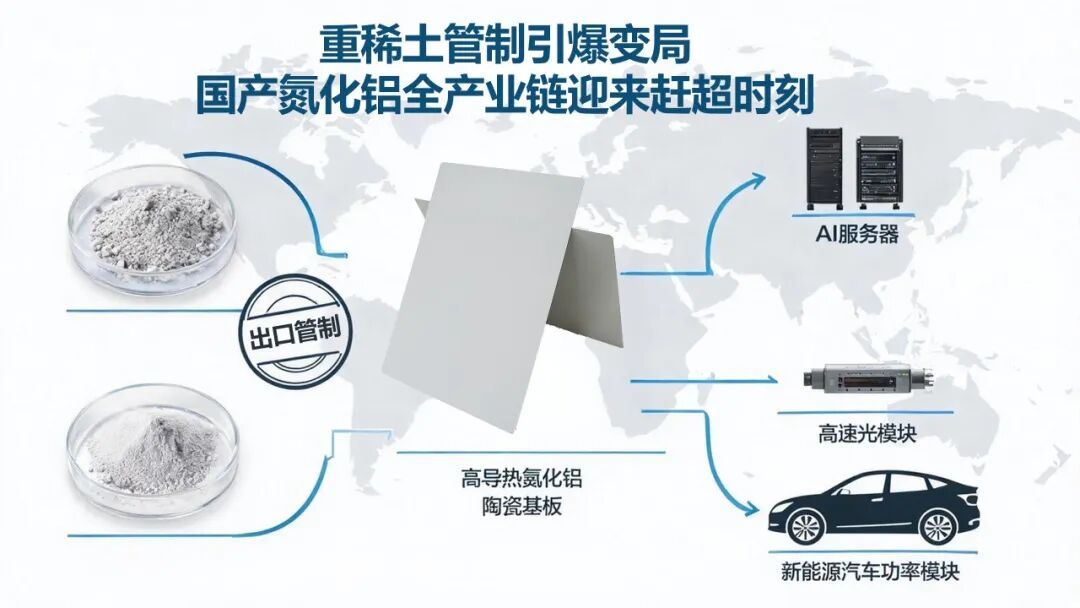
In the AlN ceramic industry chain, upstream powder is the pivotal factor. Powder feedstock fundamentally determines ceramic substrate performance, and high-end computing-grade AlN ceramic powders have long relied on imports, representing a bottleneck in the supply chain.
However, with overseas capacity release faltering, supply lead times lengthening, and export controls tightening, downstream manufacturers' stocking demand has surged—creating a historic opportunity for domestic companies with scale production capabilities and high-purity R&D capabilities.
Substrate Rise: From Substitution to Surpassing
The pace of import substitution is accelerating in the AlN ceramic substrate segment as well. While the global AlN ceramic substrate market remains dominated by Japanese manufacturers, domestic companies have crossed the threshold from "being able to produce" to "being able to produce at scale."
Surging Demand: Dual Drivers of AI Computing Power and Power Semiconductors
The acceleration of import substitution, coupled with explosive growth in two major downstream sectors, constitutes a "dual-driver" growth logic for the AlN ceramic industry chain.
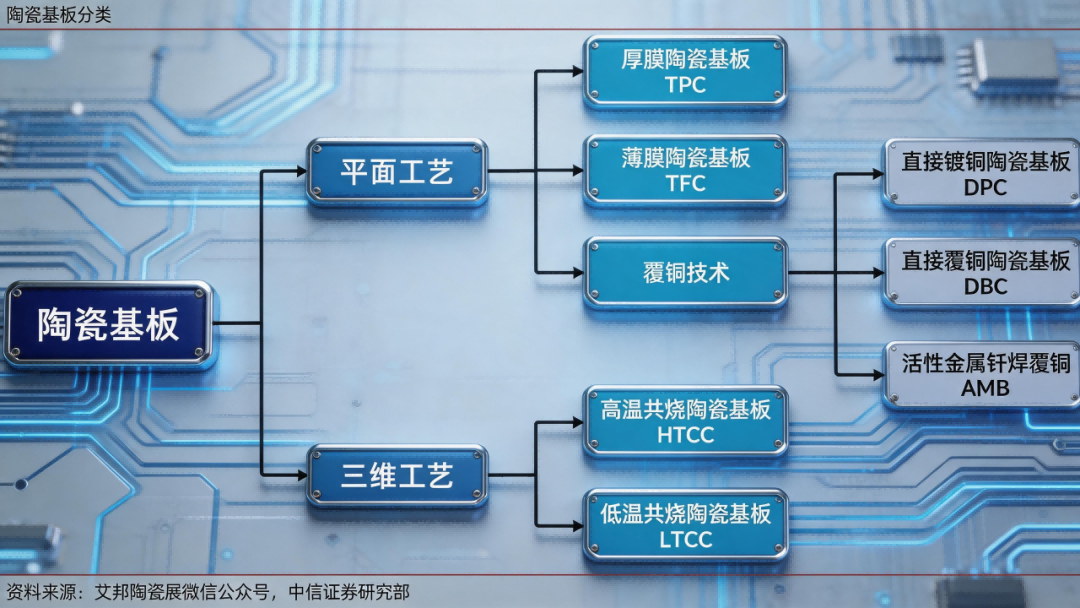
In the AI computing domain, as AI applications enter the large-scale inference phase, the heat generated by high power consumption is pushing conventional thermal management solutions to their limits. High-thermal-conductivity AlN ceramic substrates (thermal conductivity up to 170–200 W/(m·K), second only to silicon carbide and diamond among ceramics), with their disruptive thermal dissipation performance and thermal expansion matching to silicon chips, have become an indispensable strategic foundational material in AI computing.
In the optical communications and power semiconductor sectors, two key application pillars underpin growth: first, liquid cooling + ceramic substrates have become the standard thermal solution in AI servers and GPU clusters; second, the scaled deployment of 1.6T/3.2T high-speed optical modules is driving the gradual replacement of conventional substrates with ceramic alternatives, making them a core supporting material for mass production of high-speed optical modules. The unit price for 1.6T substrates is 50% higher than for 800G, and CPO substrates are up 100% higher—the upward pricing trajectory is already in motion.
In the new energy vehicle sector, the 800V high-voltage platform and increasing penetration of SiC power modules have made AlN the preferred material for automotive-grade power modules.
Outlook: A Golden Window for Vertically Integrated Industry Chains
China's heavy rare earth export controls are reshaping the competitive landscape of the global AlN ceramics industry chain, while simultaneously opening a dual window for domestic companies across all segments: accelerated import substitution and global market expansion.
Against the backdrop of global supply chain restructuring and Japanese manufacturers' capacity constraints, Fujian Huaqing, headquartered in Fujian, is one of the few core domestic enterprises with full vertical integration across the AlN powder-substrate value chain—poised to lead the import substitution wave in high-end AlN materials.
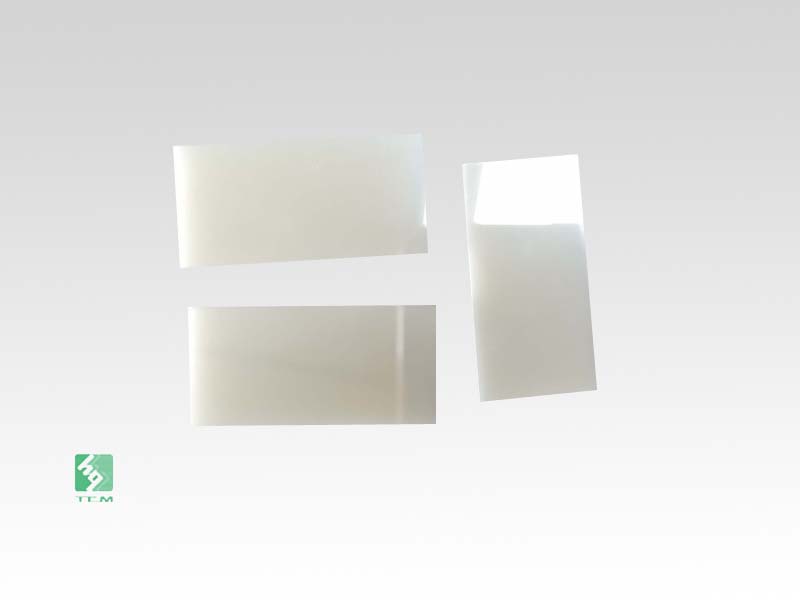
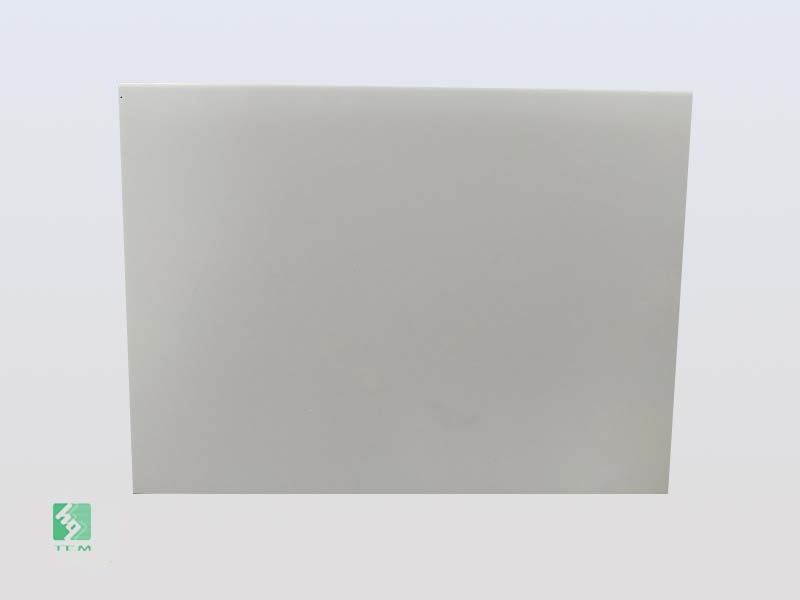
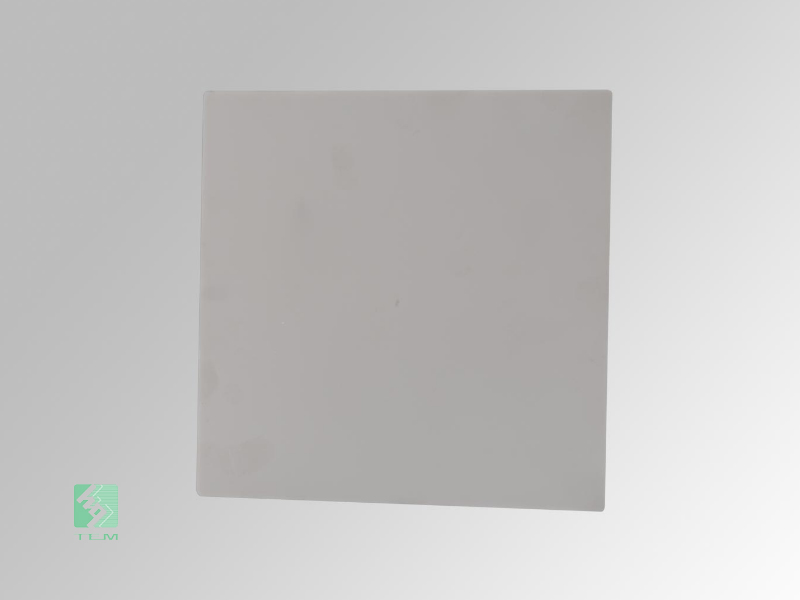
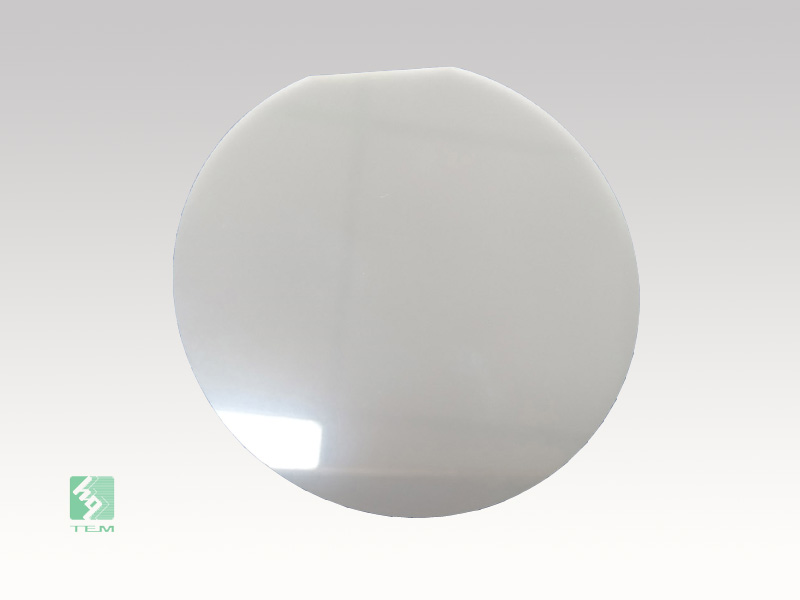
Leveraging China's complete rare earth smelting infrastructure and stable raw material supply, Fujian Huaqing avoids the critical vulnerabilities facing overseas competitors: skyrocketing rare earth procurement costs and supply disruptions. Upstream, the company mass-produces high-purity AlN powder in-house, breaking the long-standing overseas monopoly on powder supply. Midstream, it has independently developed rare earth sintering systems adapted to various high-end applications, eliminating reliance on imported formulations. Downstream, it mass-produces high-thermal-conductivity AlN ceramic substrates with performance matching that of leading international Japanese brands, offering direct replacements for imported HTCC substrates, computing power thermal management substrates, and automotive-grade power module substrates.
Targeting the three high-growth tracks of AI computing power, high-speed optical communications, and new energy vehicles, Fujian Huaqing has simultaneously advanced process refinement and capacity expansion. Its delivery lead times and overall cost structures are highly competitive compared to imported alternatives. At a time when overseas giants are curtailing capacity and supply chain risks are intensifying, Fujian Huaqing—with its full-chain independent R&D, stable supply, and localized service capabilities—is steadily capturing global market share, positioning itself as a domestic champion with exceptional growth potential worthy of long-term attention in the AlN import substitution wave.
The window of historical opportunity will not remain open forever. Those who complete vertically integrated industry chain development and achieve scaled delivery of high-end products in the coming years will ultimately seize the initiative in this global supply chain restructuring.
Why you need our services, you know you're getting highly qualified professionals who have the expertise and experience to make sure your project is done properly and functions.
if you would like a free consultation, please start bg completing the form:
Receive Sale Info, News, and Updates in Your Inbox.

 闽ICP备19012761号-1